Sulphur-crested Cockatoo
Cacatua galerita
A large white bird with a bright yellow crest is one of Australia’s most recognisable sights. Sulphur-crested Cockatoos are conspicuous in parks and woodlands, and their loud calls often carry well beyond the trees in which they are perched. Look beyond the dramatic crest: the bill, body size and group behaviour also help identify this bird.
How to identify →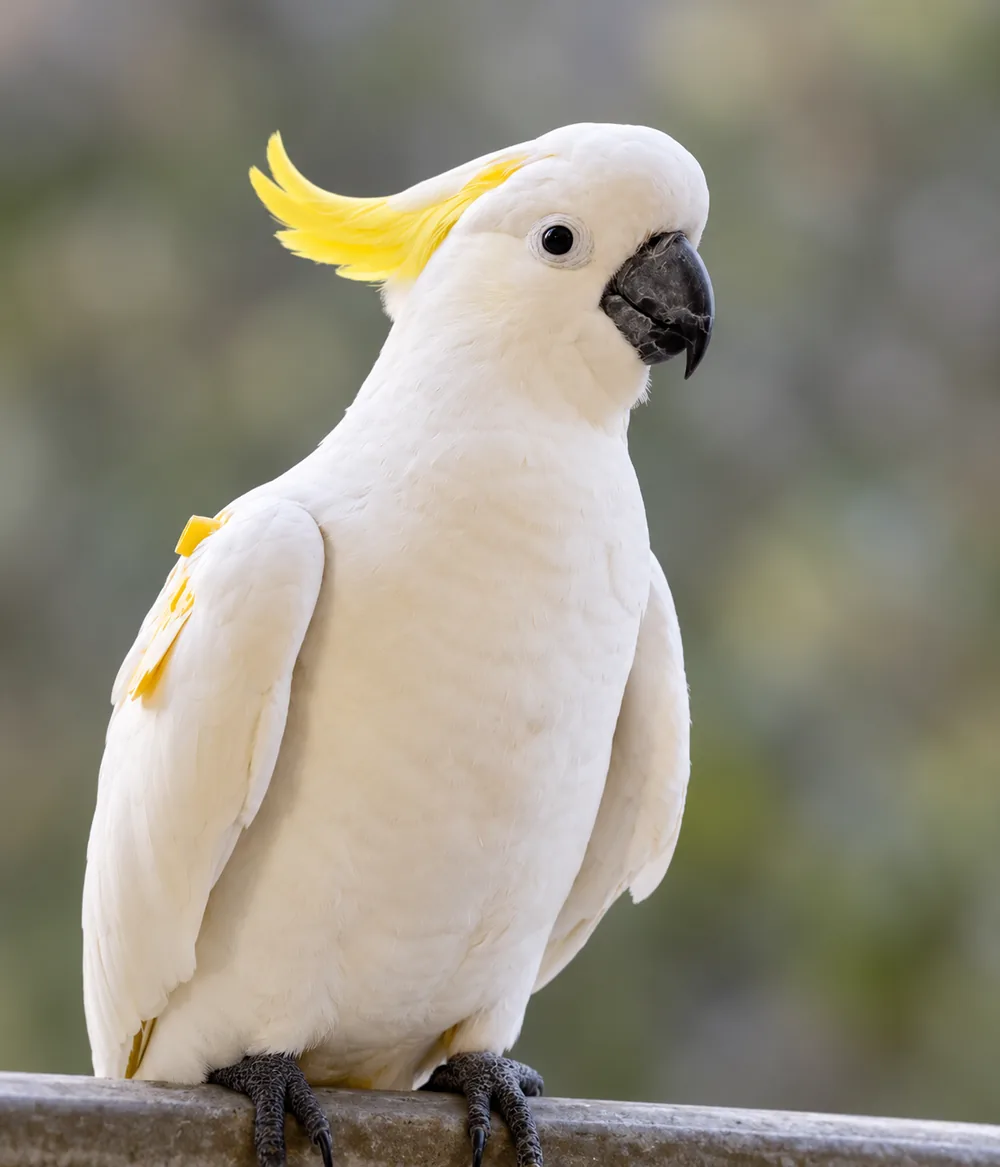
45–50 cm
A powerful, harsh screech
Woodlands, parks, forest edges and established suburbs
Seeds, nuts, berries and roots
How to identify a Sulphur-crested Cockatoo
Look for an almost entirely white body, a dark grey-to-black curved bill and a yellow crest that can be raised or flattened. Yellow can also show underneath the wings during flight.
This is a large, solidly built cockatoo. The crest is not always standing up: a bird resting quietly may look much less flamboyant than one calling or interacting.
Young birds resemble adults, and the sexes are visually similar at normal birdwatching distances. Rather than relying on fine eye-colour details, use the overall size, white plumage and distinctive crest.
Where does it live?
Sulphur-crested Cockatoos occur through much of northern and eastern mainland Australia and Tasmania. They use a variety of treed environments and are often seen near settlements with mature trees.
In a local park, look up to branches and tree hollows; in more open spaces, watch for groups on the ground searching for food. Large old trees can be especially important for hollow-nesting birds.
Food, calls and behaviour
These cockatoos eat a variety of plant foods, including seeds, nuts, berries and roots. They may feed in groups, sometimes while other birds remain perched nearby. Their powerful bills can manipulate and break apart firm foods.
Their characteristic call is a piercing screech, very different from the soft warbling of a magpie. A yellow crest may rise during excitement or social interaction, but one display alone does not reveal exactly what a bird is feeling.
They nest in suitable hollows and both parents help care for their young. Give nesting birds plenty of space and avoid approaching hollows.
Don't confuse it with…
Galah →
Both belong to the cockatoo family, but a Sulphur-crested Cockatoo is much larger and mainly white, with a vivid yellow crest. A Galah is smaller, pink across the face and breast, and grey on its wings and back.
Three clues to try outdoors
- Check whether the body is white and the crest yellow.
- Watch for a large dark curved bill and heavy build.
- Notice whether the bird is perching, feeding with others or calling loudly.
Remember: a good identification usually combines appearance, location and behaviour. Watch wild birds without disturbing them.
One more thing to notice
If you see a pale cockatoo without an obvious yellow crest, observe carefully rather than assuming the crest is absent. Some birds keep it flat; other white cockatoos and corellas have different facial markings and crest shapes.
Make it a small discovery activity
Notice one detail, such as the bird’s bill, wing pattern or feeding style. You could sketch it, note it in a journal, or simply remember it for the next time you see the bird. There is no test and no need to share your observations.
Want to keep exploring? Try the free Australian Bird Quiz or enjoy our original bird colouring pages.
Compare more birds →
Further reading and fact-checking
The identification and natural-history information in this Birdologies guide was checked against the following educational references. Descriptions are written for curious beginners; the links provide further detail.