Galah
Eolophus roseicapilla
With a rosy-pink face and breast set against grey wings, the Galah is a bird that many people recognise immediately. It is a cockatoo, despite looking very different from the familiar white Sulphur-crested Cockatoo. Galahs often gather in noisy groups and can be watched feeding on open ground or resting in trees.
How to identify →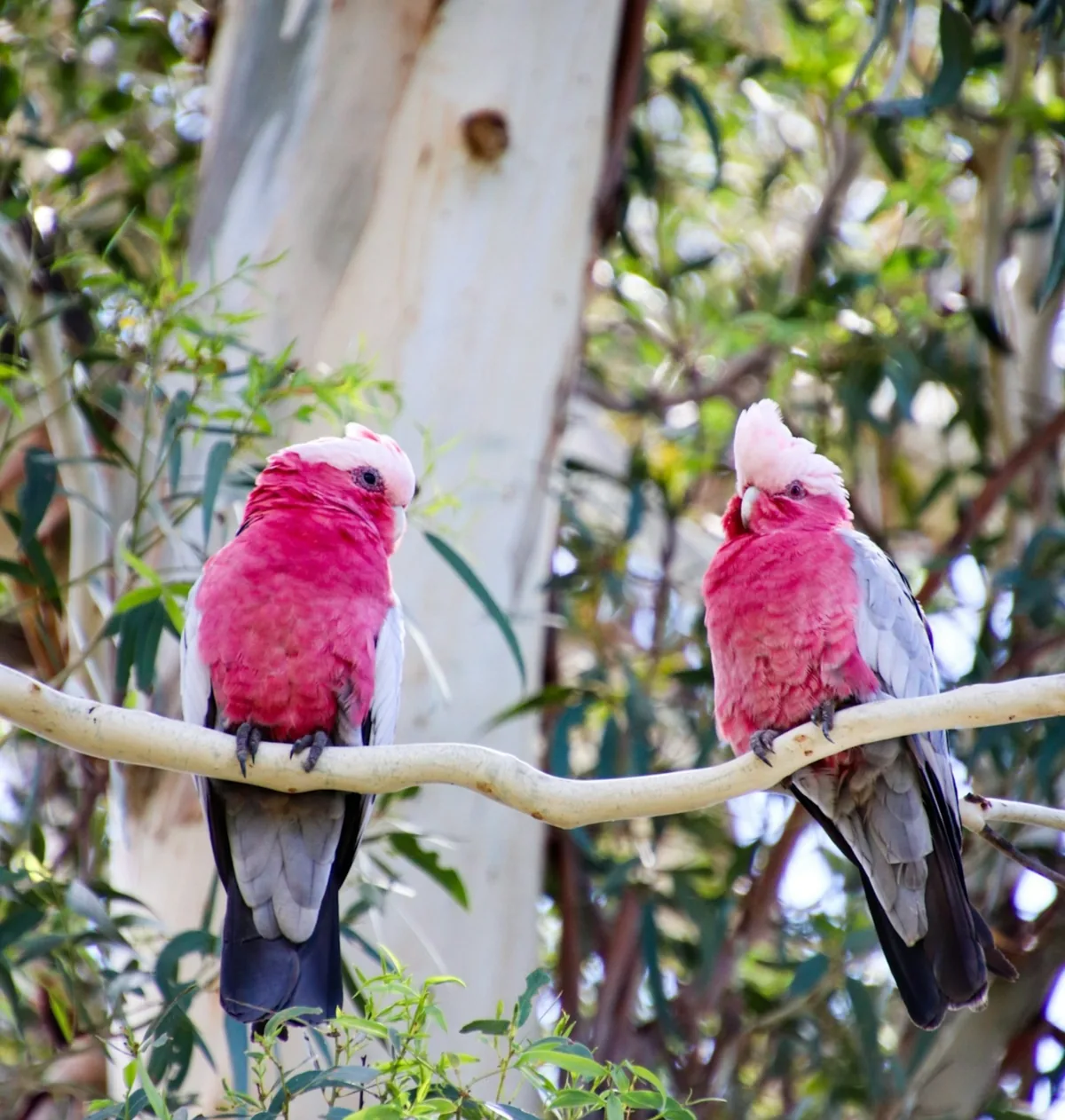
About 35–36 cm
High-pitched calls, sometimes described as “chi-chi”
Open country, woodland, parks and suburbs across much of Australia
Mostly seeds, often collected from the ground
How to identify a Galah
The most useful clues are pink on the face, neck and underparts; pale pink around the crown; and grey across the back and wings. This combination is usually distinctive even at a distance.
Galahs have a curved parrot bill and a modest crest. Compared with large white cockatoos, their overall build is smaller and more compact.
In bright sun the pink can look pale, while shade may make the grey areas appear darker. Check both halves of the bird rather than deciding from one patch of colour.
Where does it live?
Galahs occur across much of Australia, including open woodland, agricultural country, towns and well-treed suburbs. Groups may use open ground for feeding and trees for shelter or roosting.
If you notice several pink-and-grey birds on a playing field or grassy verge, observe from a distance to see whether they are feeding on seeds. This behaviour can help distinguish them from birds visiting blossoms above.
Food, calls and behaviour
Galahs commonly feed on seeds taken from the ground. Their flock behaviour can be lively and noisy, and groups may travel to find suitable feeding areas.
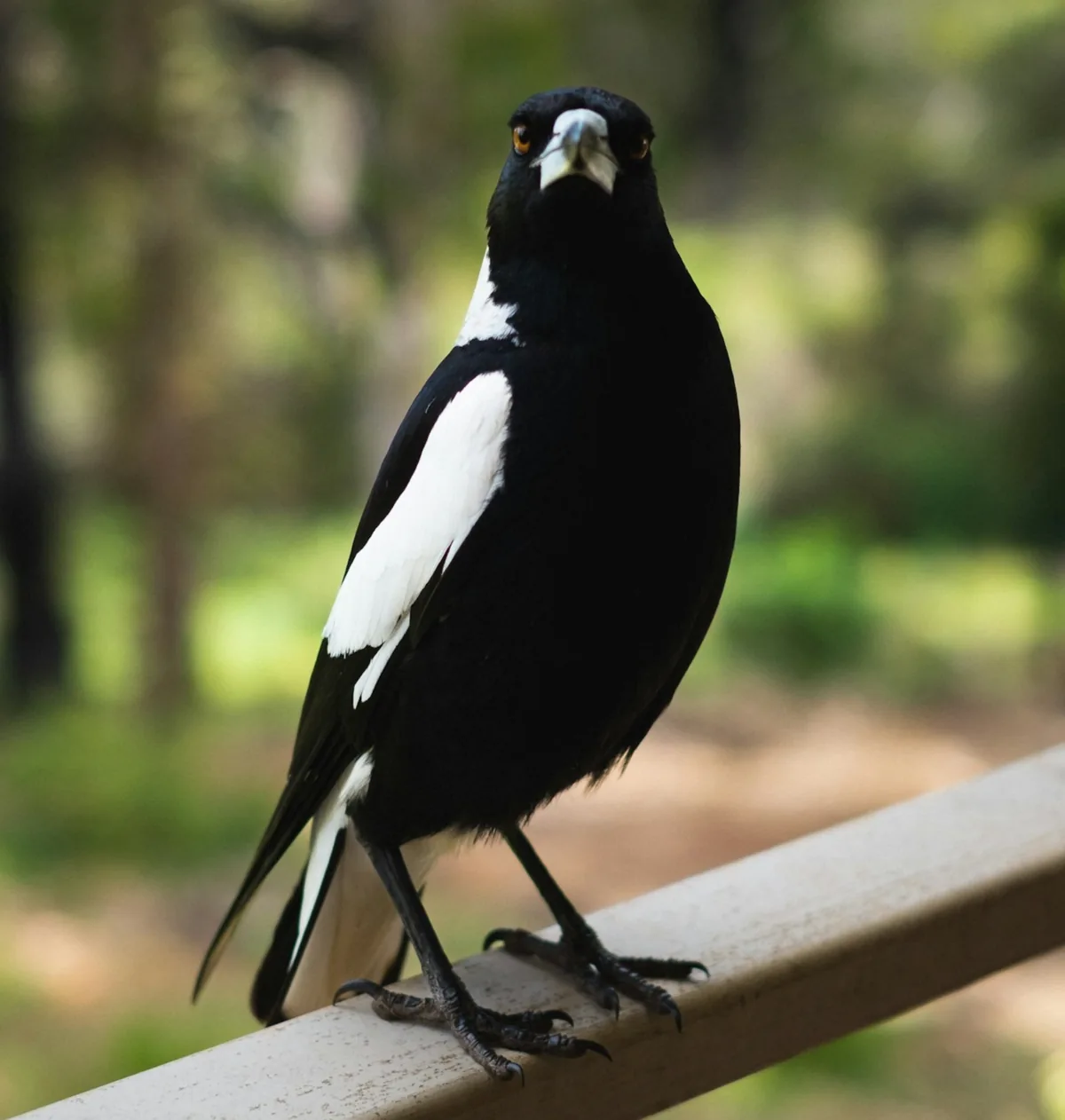
Pairs can maintain strong bonds, and large groups may gather at night. Their high-pitched calls differ from the deep, flute-like song of a magpie or the rolling laughter of a kookaburra.
Like other cockatoos, Galahs nest in tree hollows. Both adults share responsibility for eggs and young; undisturbed old trees therefore matter to their breeding.
Don't confuse it with…
Sulphur-crested Cockatoo →
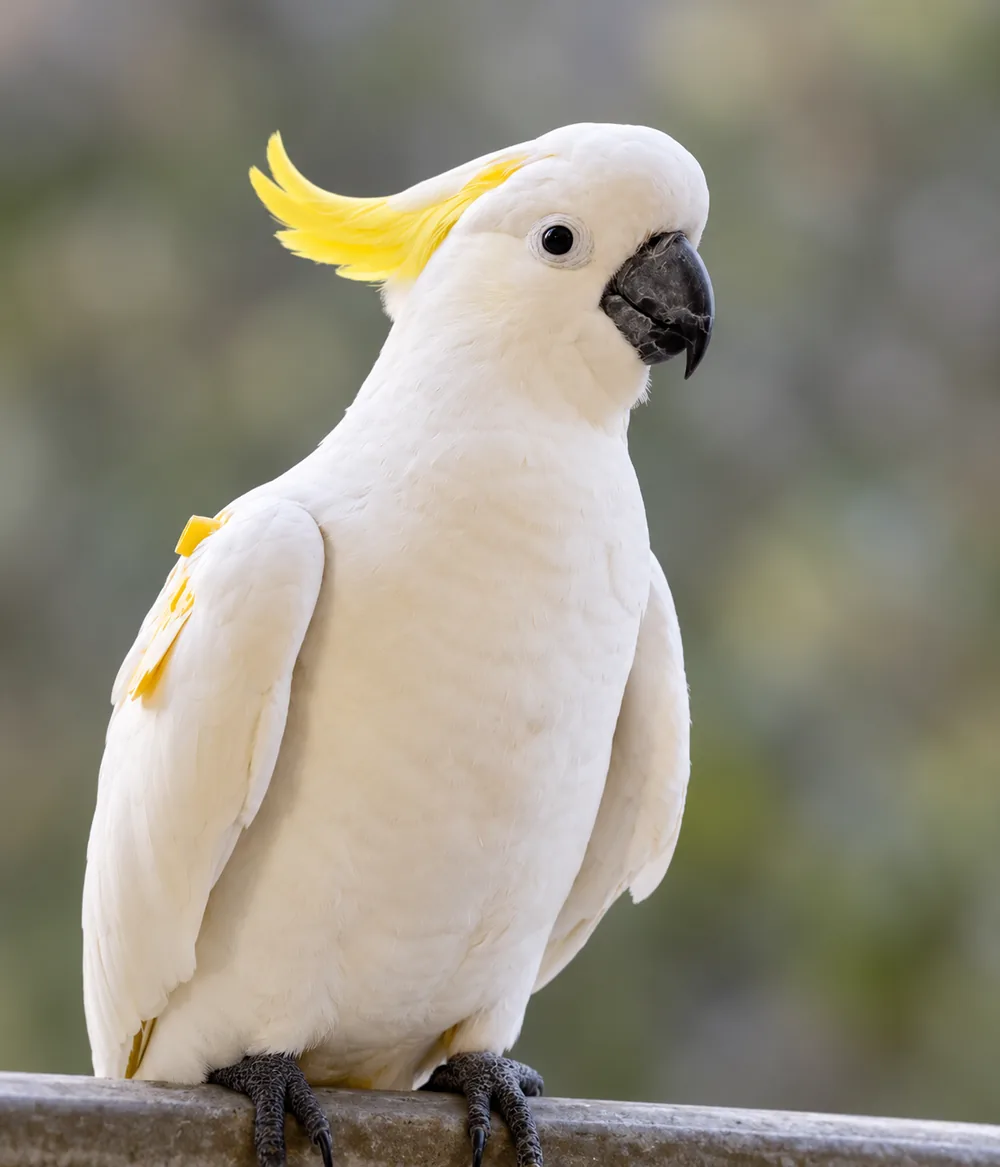
A Galah is pink and grey, with a shorter, paler crest. A Sulphur-crested Cockatoo is larger, mainly white and has a vivid yellow crest. Both are cockatoos, so check the plumage pattern rather than relying on family resemblance.
Three clues to try outdoors
- Look for pink face and breast with broad grey wings.
- Notice whether a group is feeding on seeds on the ground.
- Watch whether pairs stay close within a larger flock.
Remember: a good identification usually combines appearance, location and behaviour. Watch wild birds without disturbing them.
One more thing to notice
A Galah’s pink-and-grey palette is a wonderful colouring-page reference. You can reproduce those markings realistically or use completely imaginative colours; the activity is for enjoyment, not a test.
Make it a small discovery activity
Notice one detail, such as the bird’s bill, wing pattern or feeding style. You could sketch it, note it in a journal, or simply remember it for the next time you see the bird. There is no test and no need to share your observations.
Want to keep exploring? Try the free Australian Bird Quiz or enjoy our original bird colouring pages.
Compare more birds →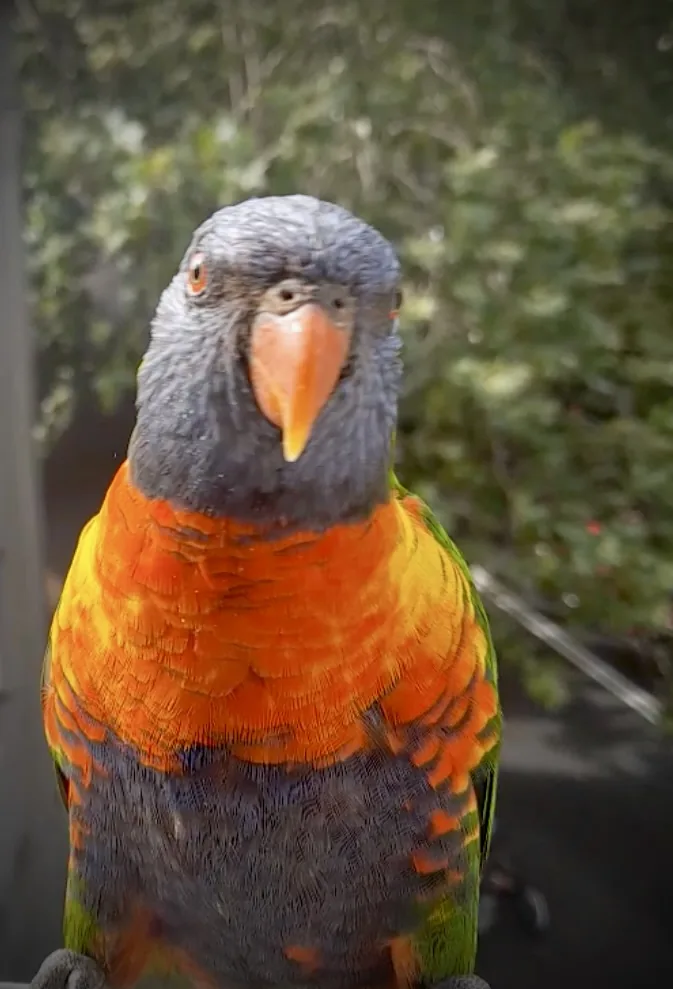
Further reading and fact-checking
The identification and natural-history information in this Birdologies guide was checked against the following educational references. Descriptions are written for curious beginners; the links provide further detail.