Laughing Kookaburra
Dacelo novaeguineae
The famous laugh of the Laughing Kookaburra is often heard before the bird is seen. This large Australian kingfisher is familiar around wooded suburbs, but it does not need to live beside water like the small fish-catching kingfishers many people imagine. Its heavy bill, broad head and watchful perching behaviour are useful clues.
How to identify →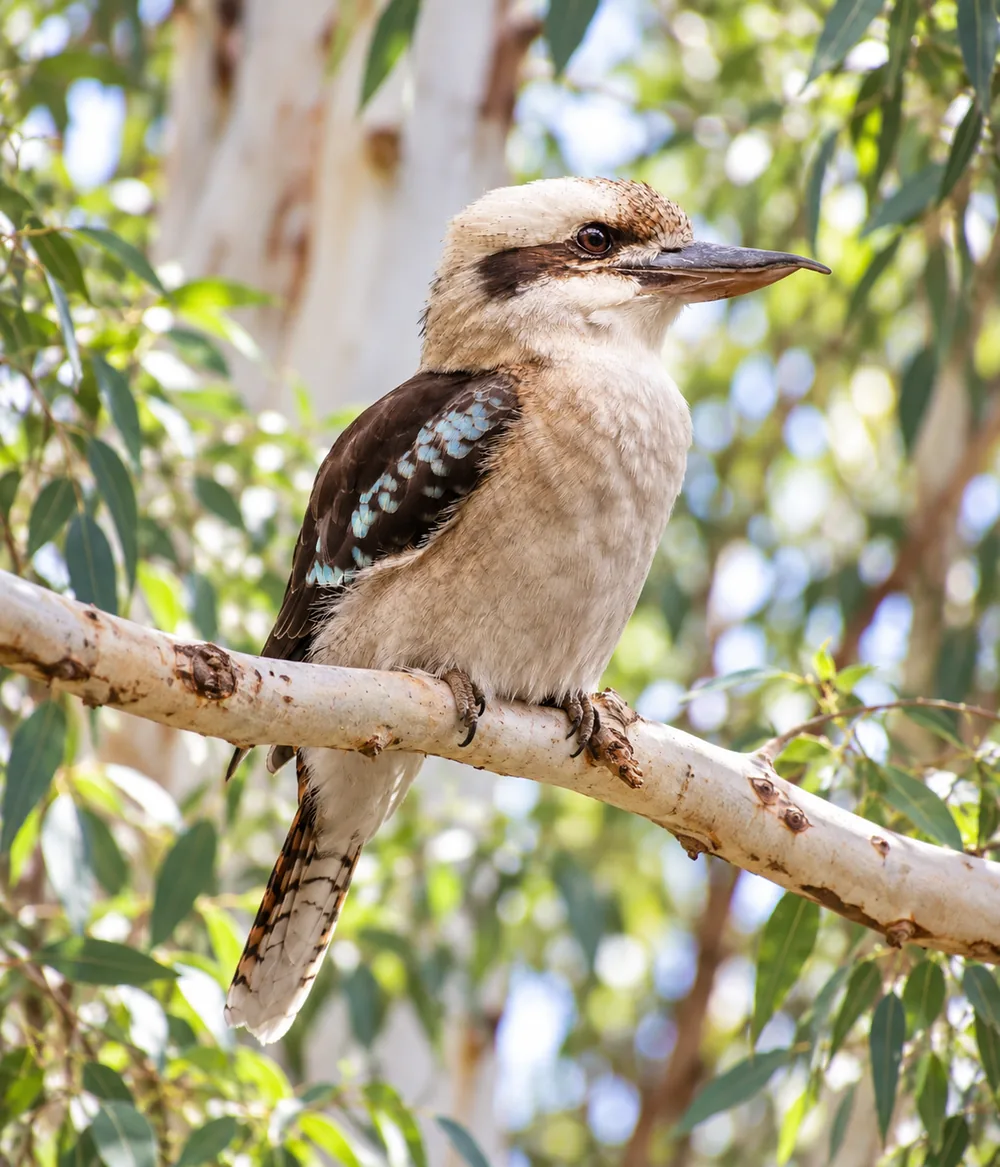
40–45 cm
A rolling, laugh-like territorial chorus
Woodlands, forest edges, tree-filled parks and gardens
Insects, worms and a range of small animals
How to identify a Laughing Kookaburra
Look for a large head, strong straight bill, brown upperparts and a pale belly. A darker stripe runs through the eye; the tail is warm brown with darker barring.
It is a substantial bird with a compact-looking body when perched. From below, the pale belly may stand out, while a side view reveals the eye stripe and characteristic bill.
Do not rely on the call alone if you are far away: listen, then try to locate the bird safely and confirm its shape and plumage.
Where does it live?
Laughing Kookaburras are widely associated with wooded parts of eastern Australia and occur in parks, gardens and open forest where trees provide perches and nesting places.
The species has also been introduced to places outside parts of its original range, including Tasmania and south-western Western Australia. A bird’s location therefore matters when you are comparing it with other kookaburra species.
Food, calls and behaviour
A kookaburra often waits on a perch, watching the ground for movement. It can swoop down to take insects, worms and other small animals, then return to a branch. It may strike larger prey against a perch before swallowing.
The celebrated “laugh” is a territorial call, not evidence that the bird is amused. Several birds may call together, with the chorus growing louder and more layered. Listening at dawn or during quiet moments can help you recognise its rhythm.
Kookaburras use nesting hollows or other suitable cavities, and family members may assist in raising young. Leave the birds and their nesting sites undisturbed.
Don't confuse it with…
Australian Magpie →
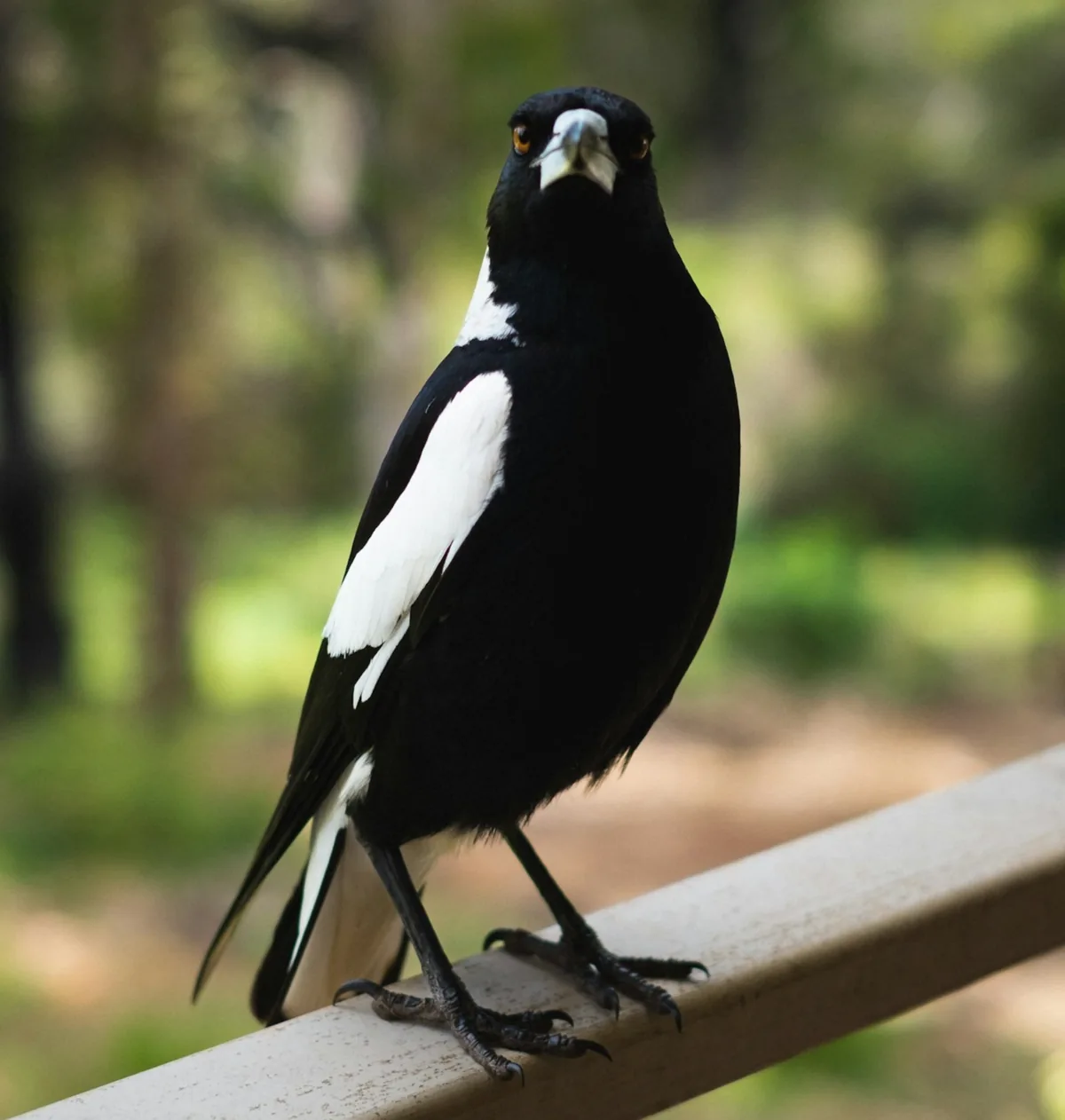
A magpie is boldly black and white and often walks on lawns; a kookaburra has brown-and-cream markings, a broad head and a heavy bill. Their songs are very different: musical magpie warbling versus a rolling kookaburra chorus.
Three clues to try outdoors
- Look for the broad head, straight heavy bill and brown eye stripe.
- Watch for long periods of stillness on a branch before a quick dive to the ground.
- Listen for a repeated cackling call, possibly joined by other birds.
Remember: a good identification usually combines appearance, location and behaviour. Watch wild birds without disturbing them.
One more thing to notice
The name “kingfisher” can be misleading here: the Laughing Kookaburra catches a wide range of land animals, not primarily fish. Behaviour is often one of the easiest clues to remember.
Make it a small discovery activity
Notice one detail, such as the bird’s bill, wing pattern or feeding style. You could sketch it, note it in a journal, or simply remember it for the next time you see the bird. There is no test and no need to share your observations.
Want to keep exploring? Try the free Australian Bird Quiz or enjoy our original bird colouring pages.
Compare more birds →
Further reading and fact-checking
The identification and natural-history information in this Birdologies guide was checked against the following educational references. Descriptions are written for curious beginners; the links provide further detail.