
Australian Magpie
Gymnorhina tibicen
A black-and-white bird walking deliberately across a lawn and singing a wonderfully fluid song may be an Australian Magpie. Its bold markings are familiar, but similar black-and-white birds live in the same places. Size, bill shape, walking behaviour and voice make a useful combination of identification clues.
How to identify →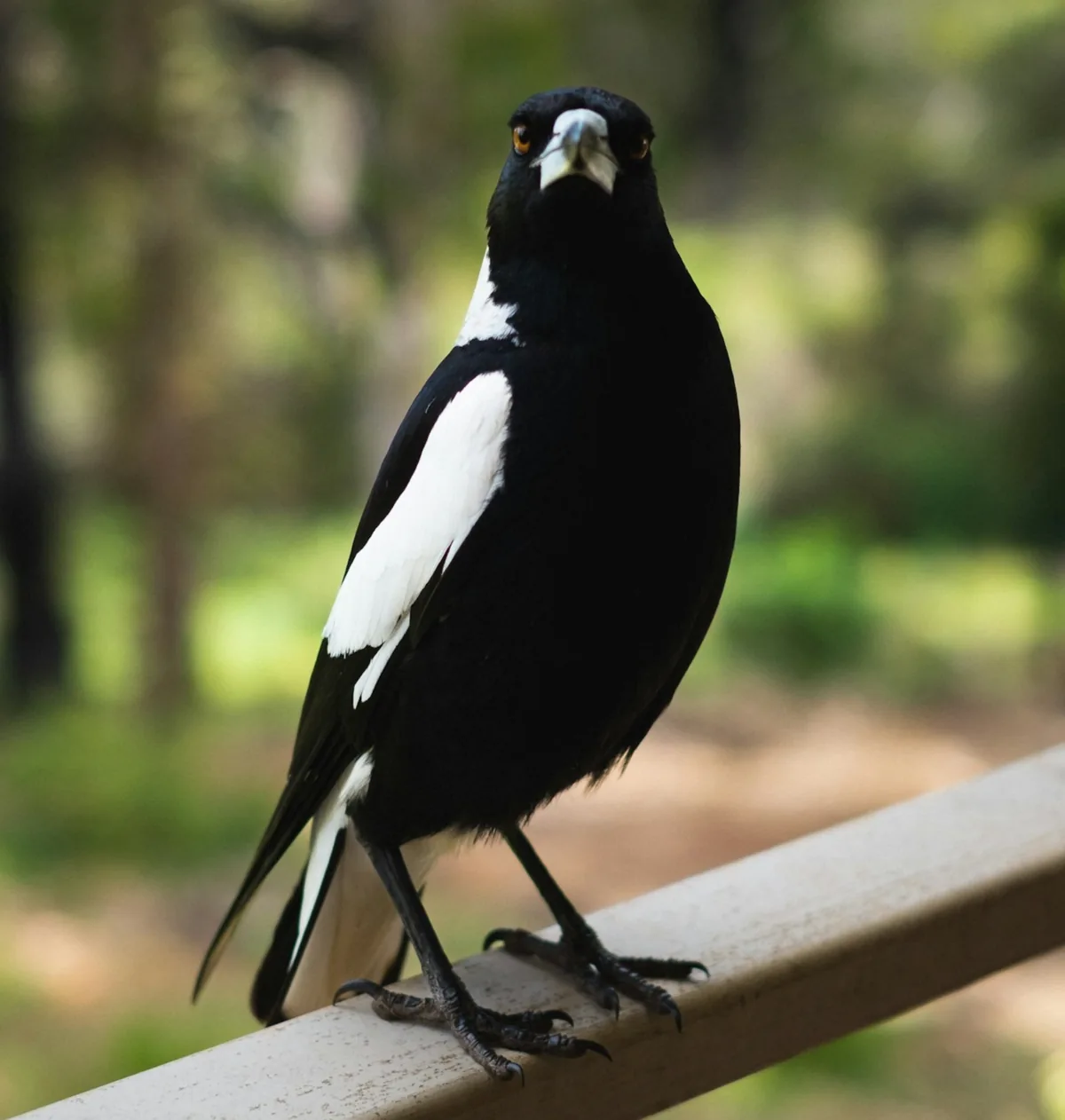
36–44 cm
Rich, flute-like warbling and group songs
Lawns, sports fields, parks, gardens and open woodland
Insects and other small animals, usually found while walking on the ground
How to identify a Australian Magpie
Australian Magpies are sturdy birds with a strong, pointed, wedge-shaped bill. Their plumage is black and white, but the balance and placement of those colours varies across different parts of Australia.
Look for contrasting white areas around the back of the neck and shoulder, and note whether the back appears black or white. Adult birds have chestnut-brown eyes, a detail that may be visible from a respectful distance or in a clear photograph.
A bird’s colour pattern does not always identify its sex or location without more context. If you are uncertain, start with general build and behaviour rather than a single patch of white feathers.
Where does it live?
Magpies are common wherever there are trees alongside open ground. Parks, playing fields, lawns, gardens and lightly wooded countryside provide both perches and feeding places.
They may live in family or territorial groups and can be seen throughout the year. Watching one for a minute or two often reveals a repeated pattern of walking, pausing and probing the ground.
Food, calls and behaviour
Magpies search mainly for insects and larvae while walking on the ground. Their diet is varied, but ground-foraging is a valuable clue for beginners.
Their musical, fluting song can be performed alone or by several birds calling together. Try to listen for the rounded, rolling notes rather than identifying the bird only by its silhouette.
A small minority of magpies swoop people near nests during breeding season. Most do not. If one is defending a nesting area, move away calmly and give it space; do not approach nests or try to interact with chicks.
Don't confuse it with…
Laughing Kookaburra →
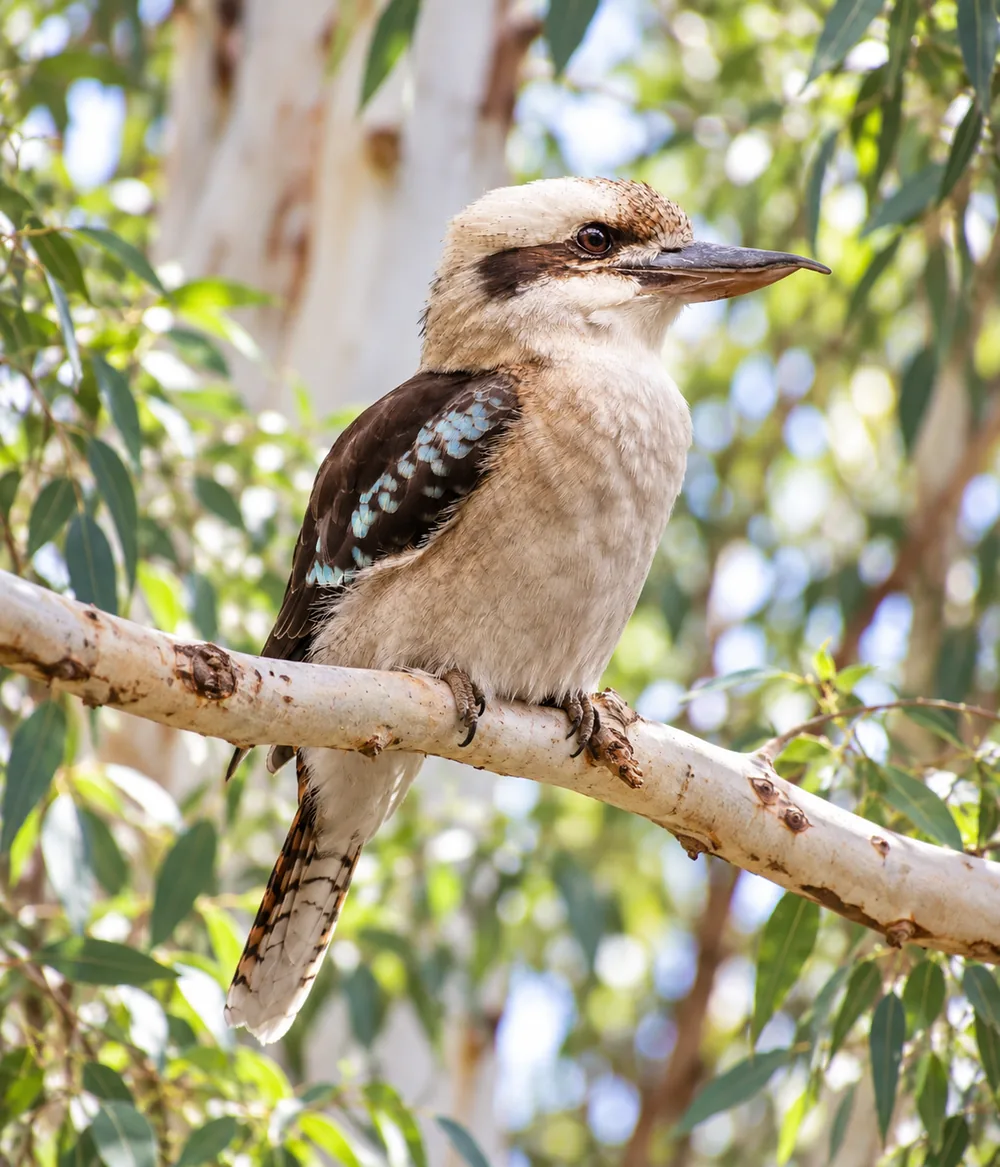
A magpie is black and white with a strong pointed bill, often walking and probing lawns while singing a fluid warble. A kookaburra is mostly brown and pale, has a much larger head and heavy bill, and commonly watches for prey from a perch.
Three clues to try outdoors
- Notice whether it walks across open ground searching for insects.
- Look for the strong pointed bill and black-and-white plumage.
- Listen for long, fluid, flute-like notes, sometimes sung by more than one bird.
Remember: a good identification usually combines appearance, location and behaviour. Watch wild birds without disturbing them.
One more thing to notice
Not every black-and-white bird is a magpie. The smaller Magpie-lark has different proportions and markings, while butcherbirds have their own patterns and calls. Photograph or sketch the bill and head shape if you are uncertain.
Make it a small discovery activity
Notice one detail, such as the bird’s bill, wing pattern or feeding style. You could sketch it, note it in a journal, or simply remember it for the next time you see the bird. There is no test and no need to share your observations.
Want to keep exploring? Try the free Australian Bird Quiz or enjoy our original bird colouring pages.
Compare more birds →
Further reading and fact-checking
The identification and natural-history information in this Birdologies guide was checked against the following educational references. Descriptions are written for curious beginners; the links provide further detail.