Crimson Rosella
Platycercus elegans
The vivid red-and-blue plumage of an adult Crimson Rosella makes it an eye-catching forest parrot. But not every Crimson Rosella is crimson: yellow and orange colour forms exist, and young birds can be mostly greenish. This is a good reminder that location, age and pattern often matter as much as the bird’s most famous colour.
How to identify →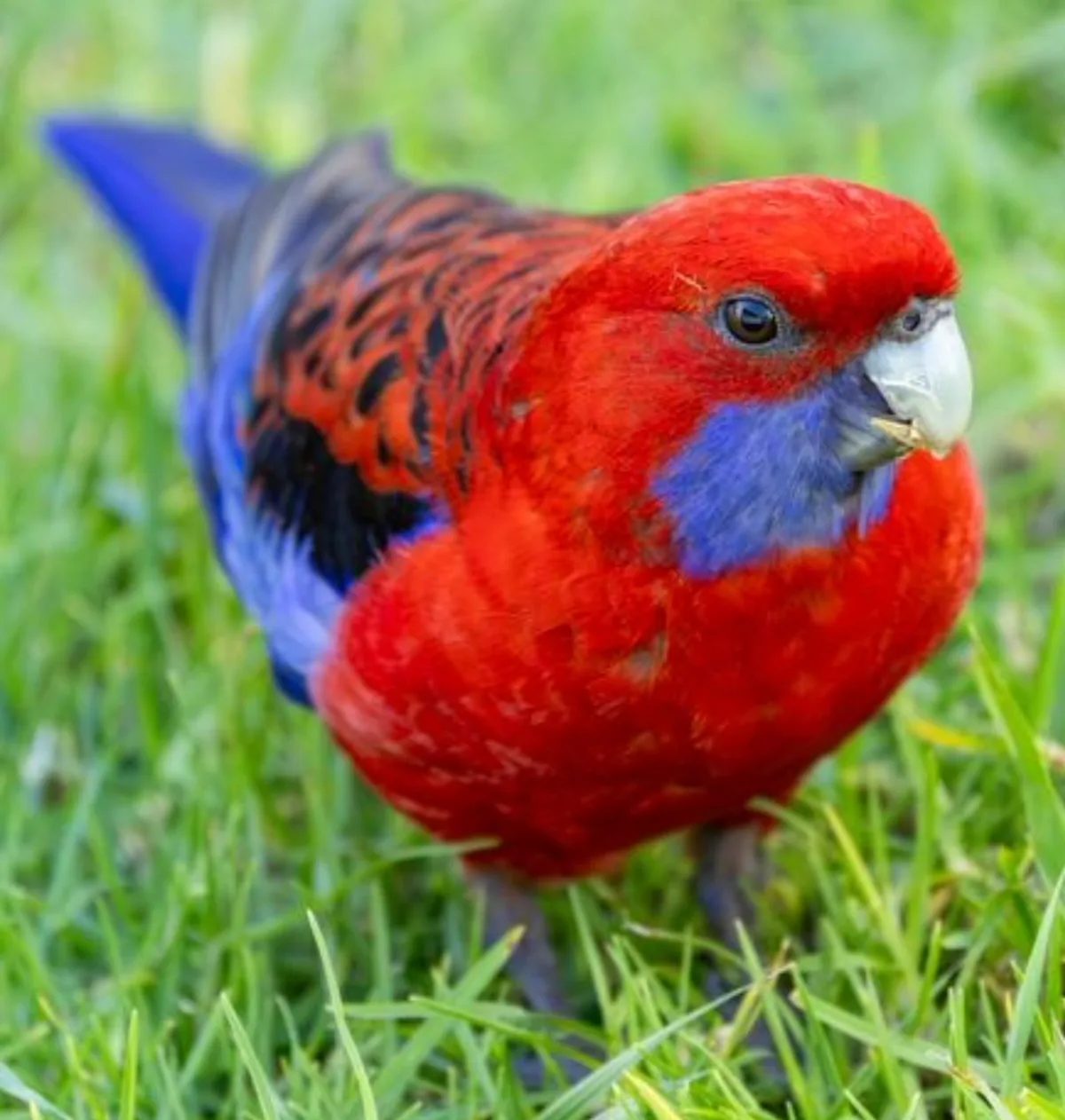
32–36 cm
Whistles and sharp, repeated notes
Forests and woodlands, especially wetter eucalypt habitats
Seeds, buds, flowers and some insects
How to identify a Crimson Rosella
The familiar crimson form has a predominantly deep red body, vivid blue cheeks, blue wing patches and a long tail. Dark feathers edged in red create a patterned, scalloped look across the upper back.
The species includes yellow and orange forms in different regions. A young bird may look mostly olive-green while retaining blue cheek markings, so a green parrot with the right shape and location deserves a second look.
Rosellas have a broad, long-tailed parrot silhouette. Rather than searching only for “red,” pay attention to the cheeks, wing panels, long tail and regional colour form.
Where does it live?
Crimson Rosellas are often found in taller, wetter eucalypt forests and woodlands, particularly through parts of eastern and south-eastern Australia. The exact colour form varies geographically.
Look in forest edges, lightly wooded areas and trees where birds may perch or feed. The setting can help narrow an identification, but it should not replace checking the bird’s markings.
Food, calls and behaviour
Crimson Rosellas commonly eat seeds from grasses, trees and shrubs. They also take buds, flowers and insects, and can forage on the ground as well as in vegetation.
You might see an adult bird alone, in a pair or in a small group. Listen for short whistles and repeated calls, and note whether the bird remains high in foliage or descends to forage.
They use tree hollows for nesting, and both parents help feed their young. Viewing from a respectful distance protects the birds and leaves you time to notice their shape and movement.
Don't confuse it with…
Rainbow Lorikeet →
A typical adult Crimson Rosella is red with blue cheeks and a long tail, whereas a Rainbow Lorikeet has a blue head, green upperparts and orange-yellow breast. Crimson Rosellas commonly feed on seeds; lorikeets are especially associated with flowering trees.
Three clues to try outdoors
- Check the blue cheek patches and long tail.
- Look for black scalloping across the back of a red adult.
- Consider the location and whether the bird might be a juvenile or a yellow/orange colour form.
Remember: a good identification usually combines appearance, location and behaviour. Watch wild birds without disturbing them.
One more thing to notice
This bird is an excellent example of why an identification guide should allow for variation. A photo that shows the cheek patch, wing colour and tail is often more useful than a note that simply says “red parrot.”
Make it a small discovery activity
Notice one detail, such as the bird’s bill, wing pattern or feeding style. You could sketch it, note it in a journal, or simply remember it for the next time you see the bird. There is no test and no need to share your observations.
Want to keep exploring? Try the free Australian Bird Quiz or enjoy our original bird colouring pages.
Compare more birds →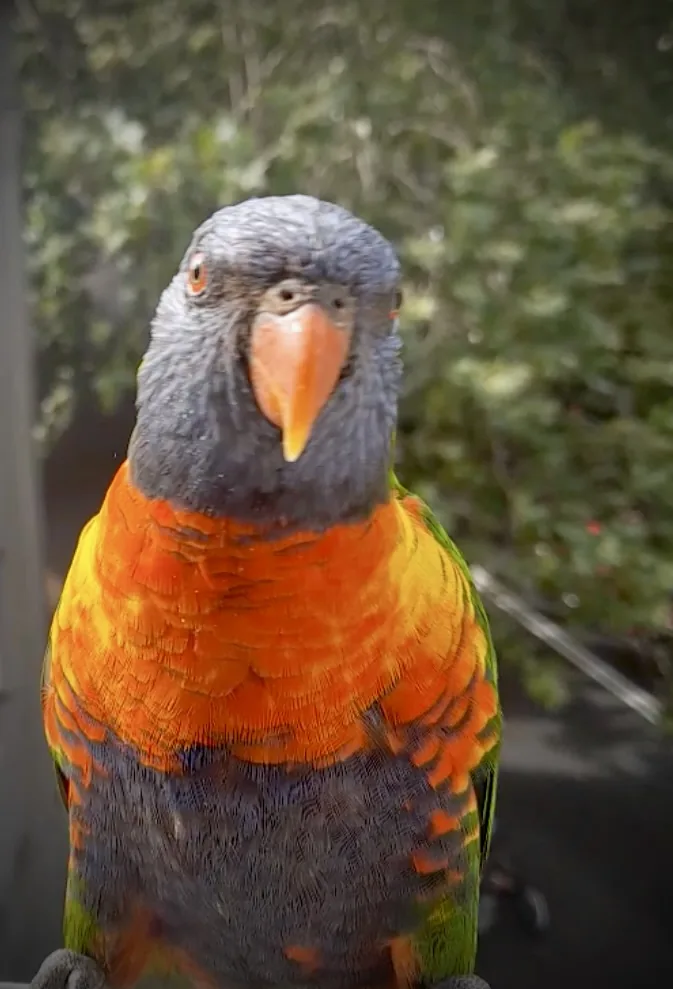
Further reading and fact-checking
The identification and natural-history information in this Birdologies guide was checked against the following educational references. Descriptions are written for curious beginners; the links provide further detail.